What Media Training Can’t Teach You (But Your Biology Can)
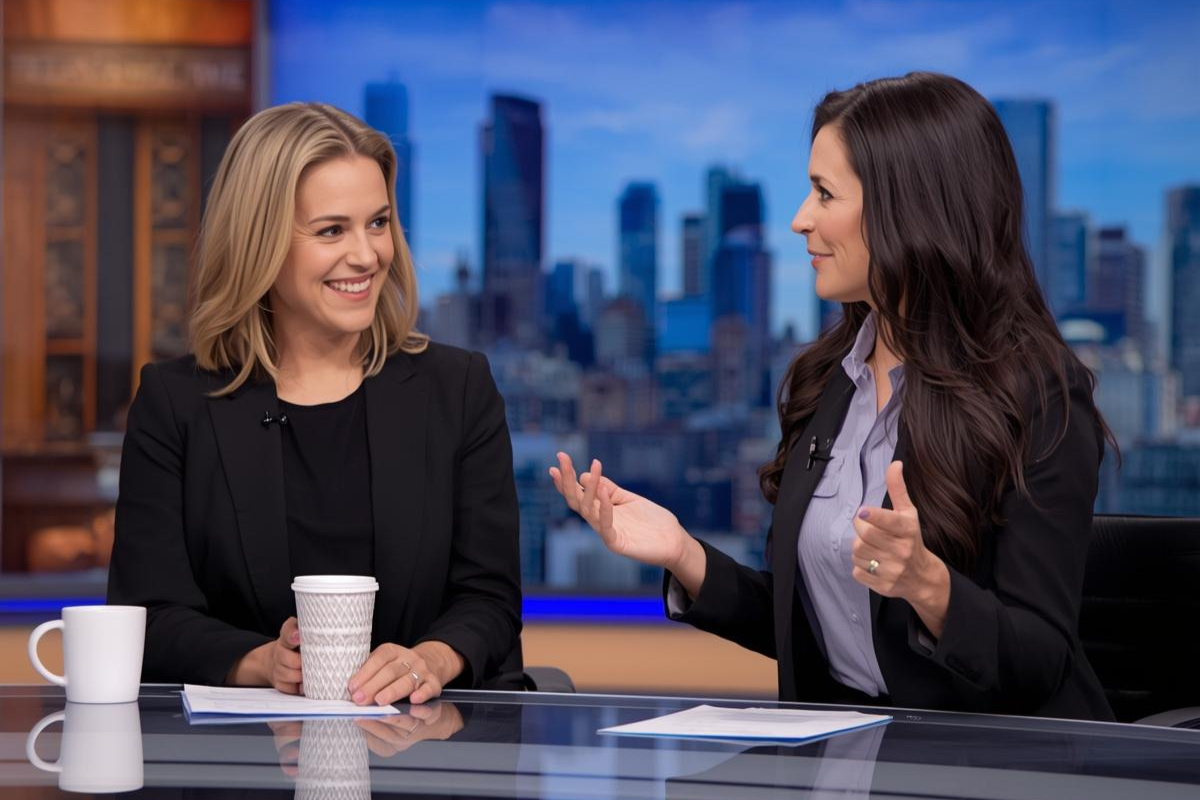
Why the most overlooked driver of executive presence has nothing to do with messaging frameworks
Summary: Executive presence isn’t just a communication skill learned through media training — it’s rooted in biology. The cognitive abilities that make someone compelling on camera (memory, verbal fluency, emotional intelligence, and stress regulation) depend on overall brain and nervous system health. Research increasingly shows that wellbeing, including the quality of our intimate connections, supports these cognitive functions. When the body and mind are regulated and connected, presence becomes natural rather than performative.
Here’s what media training can’t teach you. You can perfect your talking points. You can master the three-second pause before the tough question. You can learn to stop saying ‘um.’ But if your brain isn’t fully present and functioning when the camera light turns red — none of it matters.
The executives who command a room — whether on stage, on a Zoom call, or in a live studio media interview — aren’t just well-prepped, they’re cognitively alive.
Their memory retrieval is fast.
Their verbal fluency is fluid.
Their ability to read a room and pivot in real-time is fluid and vibrant.
Their relaxation is palpable.
Their resilience is constant.
Their ability to act and recenter is instantaneous.
What’s most important is that their presence isn’t a technique but biology.
So here’s the secret nobody in the green room is talking about: your cognitive performance is your media presence.
And your cognitive performance — the science is increasingly clear on this — is intimately connected to the quality of your overall wellbeing.
Including, yes, your sex life.
Stay with me.
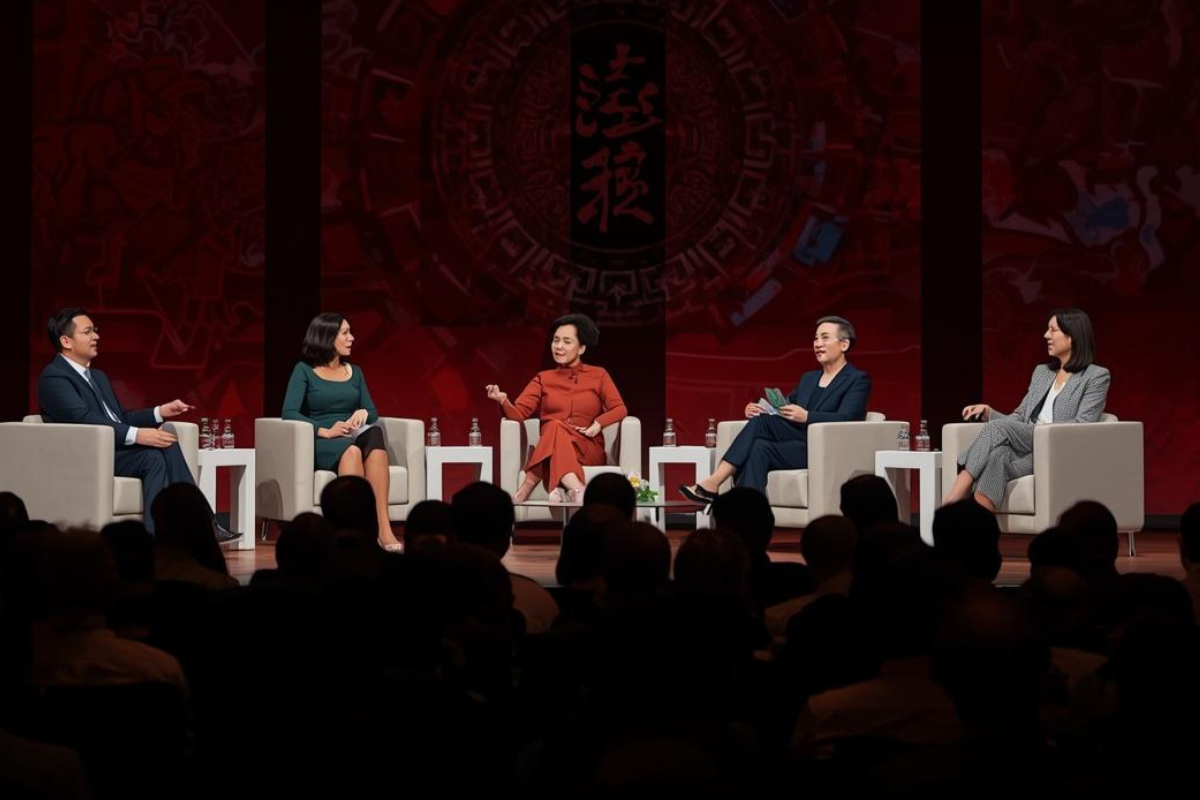
What Media Training Is Actually Measuring
Think about what it takes to respond well on camera or in a high-stakes media interview. You need:
- Memory recall under pressure — pulling the right story or stat at precisely the right moment
- Verbal fluency — the ability to think and speak simultaneously, without losing your thread
- Decision-making speed — knowing in half a second whether to answer, bridge, or reframe
- Stress regulation — keeping the cortisol spike from derailing your body and telegraphing across your face
- Emotional intelligence — reading your interviewer, your audience, and the energy in the room
Rather than “soft skills” each of these is an executive function — a cognitive process housed primarily in the prefrontal cortex, and one that is highly sensitive to your overall physical and emotional state.
Media training develops presence and technique. But technique without cognitive capacity is a beautifully written score performed by a sleep-deprived musician primed to make mistakes.
The hidden lever — the one that amplifies everything else you’re working on — is your brain health.
The Science That Changes the Conversation For Presentations, Panels, Podcasts and Media Interviews

Recent neuroscience proves something that holistic medicine has understood for centuries: your cognitive health and your sexual and intimate wellbeing are not separate systems.
They are deeply, biologically interwoven.
A 2023 study published in The Gerontologist tracked 1,683 adults between ages 62 and 90. The findings were unambiguous: higher sexual satisfaction and emotional intimacy were directly associated with stronger cognitive performance — specifically in memory, verbal fluency, and decision-making.
These are the exact same cognitive functions that separate a mediocre media appearance from a masterful one.
And critically, the variable wasn’t frequency but quality. The depth of connection. The felt sense of safety and emotional attunement. The presence.
If this is true for people in their seventies and eighties, the implication for high-functioning executives in their prime is hard to ignore.
Here’s why the connection exists. Healthy intimacy is not just a pleasant by-product of a good life. It’s a biological readout — a reflection of multiple systems working in sync:
- Vascular health — the same circulation that keeps your brain oxygenated and fully functioning
- Hormonal balance — testosterone, oxytocin, and estrogen all play roles in cognitive function and emotional regulation
- Stress regulation — the capacity of your nervous system to return to baseline after threat
- Emotional connection — the social circuitry of the brain, which directly shapes memory consolidation and empathy
- Executive function — the prefrontal cortex capacity that drives planning, focus, and communication
When those systems are thriving, intimacy naturally follows. And — here’s the feedback loop — when intimacy thrives, the brain benefits. This isn’t opinion. This is data.
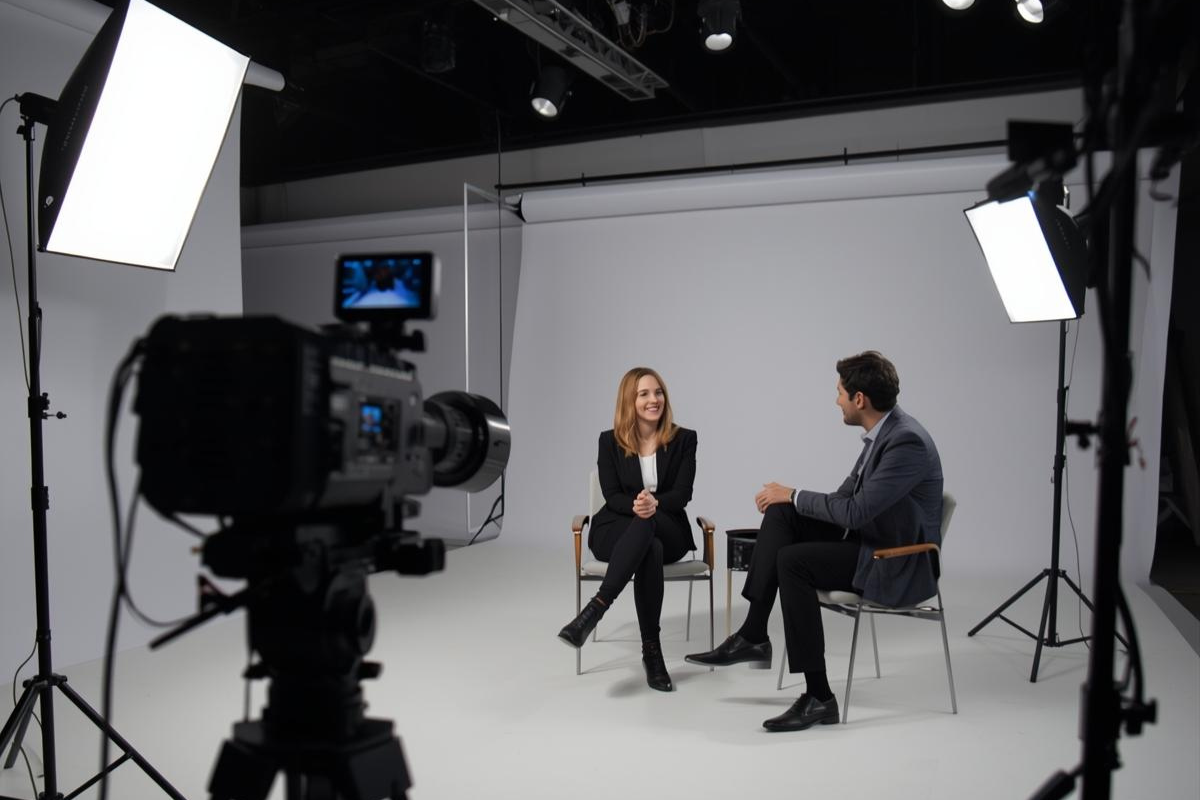
What Ancient Wisdom Already Knew About Executive Presence
The Āyurvedic tradition — one of the world’s oldest medical systems — has long classified sexual wellbeing as a vital sign. This is not a luxury or superfluous indulgence. It’s a critical diagnostic indicator of the health of your entire internal ecosystem.
In this framework, a decline in sexual vitality isn’t “just aging” or “just stress,” but feedback. Instead, it’s the body’s way of flagging that something upstream needs attention — whether that’s sleep, nutrition, nervous system dysregulation, or emotional disconnection.
Modern neuroscience is finally catching up.
We now know that a fulfilling intimate life supports brain function through multiple pathways: it regulates mood, improves sleep architecture, enhances memory consolidation, and deepens the human connection that is fundamental to cognitive longevity.
So yes — do the media training.
Refine the message architecture.
Practice the camera presence.
But understand that all of that work sits on top of a solid biological foundation.
And if the foundation is unstable, technique and rehearsal can only carry you so far.
Why CEOs Specifically Can’t Afford to Ignore This

The pressure on a CEO in a media context is unique. You are not just communicating information — you are embodying your organization’s credibility.
Investors, journalists, employees, partners and the public are analyzing signals beyond your words.
They are literally reading your nervous system.
Are you present?
Are you regulated?
Do you have the cognitive fluency to handle an unexpected question without losing your thread?
Is there depth behind your eyes or is someone clearly running on superficial theatrics?
At the highest level, audiences read far beyond your words — and they do it unconsciously. The amygdala processes emotional incongruence in milliseconds, long before the conscious mind registers a reaction, which means if your biology is dysregulated, it will show up on camera regardless of how perfectly you’ve rehearsed your key messages.
The executives who are genuinely magnetic in a media environment are, more often than not, people who have invested in their whole-person health.
Their brains are well-rested, well-nourished, and emotionally connected.
Their nervous systems can absorb pressure without catastrophizing. Their capacity for empathy — which is, at its root, a cognitive function — is intact and active.
The Practical Takeaway: Presence Rituals for the Executive Brain and Executive Presence
The good news is that building the cognitive foundation for exceptional media presence doesn’t require a dramatic life overhaul.
It starts with small, consistent practices that nourish the systems we’ve been discussing — many of which work precisely because they cultivate the same intimacy and connection that the research links to cognitive sharpness.
Unlike performance hacks, these are presence practices — and presence is the one thing that no media trainer can give you. It has to come from the inside.
Six Practical Presence Rituals That Compound Over Time
1. The Two-Minute Body Scan (Connecting with Yourself First)
Before you can be genuinely present with another person — or with a camera — you have to be present with yourself.
Neuroscience has a word for this capacity: interoception — the brain’s ability to sense and interpret signals from inside the body.
Research from the Max Planck Institute shows that people with stronger interoceptive awareness have greater emotional regulation, more accurate self-assessment, and deeper empathy — all of which are foundational to genuine executive presence.
The practice is simple: before any significant conversation, interview, or appearance, take two minutes to sit quietly and scan inward.
Start at the top of your head and move slowly down all the way to your toes, noticing — without judging — whatever sensations are present, relaxed, tense or anything else, without judgement. You might experience tension in the jaw. Heaviness in the chest. Ease in the shoulders.
You’re not trying to fix anything. You’re simply making contact with yourself. That act of turning inward, done consistently, builds the neural circuitry that makes you available — truly available — to the people in front of you, in private and in public.
2. Intentional Eye Contact

Sit face-to-face with your partner or a trusted person and hold uninterrupted eye contact for sixty seconds.
It may feel awkward at first but this simple practice increases oxytocin, grows trust, and deepens the very emotional attunement that makes you magnetic on camera.
Consistent eye contact is also the single most powerful non-verbal signal in a media interview. When you connect deeply with the host, the audience, whether virtual or live, feels it. Practice it off-camera so it’s natural when it counts.
3. Slow Breathwork — Before You Walk Into any “Room”
Two to five minutes of slow, intentional breathing — inhale for four counts, hold for four, exhale for six — does something measurable: it brings your heart rhythm into coherence and regulates your nervous system before you ever shake a hand or sit across from anyone on a panel, in front of a camera or in private on Zoom.
And here’s what makes it relevant beyond your own biology — research from the HeartMath Institute shows that when one person enters a conversation in a state of cardiac coherence, it has a measurable influence on the heart rhythms of the people around them. In other words it actually synchronizes heart rhythms between people and resets the nervous system.
Which means the calm, regulated state you cultivate alone in the green room, backstage or before a meeting, doesn’t stay with you — it extends to the host, the journalist, the audience. A regulated nervous system absorbs pressure and, almost invisibly, invites others into that same state.
For CEOs heading into a high-stakes media appearance, this is a far more effective pre-presentation ritual than one more run-through of your talking points.
4. Physical Connection Without Agenda
Gentle touch — a foot rub, a long embrace, a hand on the shoulder — is grounding and soothing which activates the parasympathetic nervous system and releases the good feeling neurotransmitters like dopamine and serotonin.
If you’ve ever had a doctor’s reassuring touch on your arm before a medical examination, you’ve experienced the beginning of healing before any diagnosis or prescription.
Do this without an agenda. The only thing required is your presence. Research consistently shows that physical touch reduces cortisol, improves mood stability, and strengthens emotional resilience — three things that directly translate to better in-person and on-camera composure.
5. The End-of-Day Debrief

Create a brief, consistent evening ritual with your partner, child or a trusted confidant. You can start with two questions: “What brought you joy today?” and “Where did you feel off-kilter?”
You might think that this is akin to therapy — however, the broader view is that it’s actually a form of executive empathy training.
The capacity to reflect, to articulate inner states, and to listen with genuine curiosity creates a safe space for expression and strengthens the same circuitry that makes a CEO compelling in a long-form interview or a hostile press conference. Emotional vocabulary and the ability to listen wholeheartedly is cognitive horsepower.
6. Expressed Appreciation — With the People Who Matter
Most executives are well-practiced at receiving compliments. Far fewer make a habit of giving them — genuinely, specifically, and in the moment. The Algoe & Way (2014) study from the University of North Carolina found that verbal expressions of gratitude between 77 monogamous heterosexual couples directly trigger oxytocin release, deepen feelings of safety, and strengthen social bonds.
You don’t need to have any particular preference or be in a couple to feel the positive benefits of this practice.
Before a TV or podcast interview, tell the host one specific thing you admire about their work. Before a print interview, panel or press conversation, acknowledge something the moderator has said or the journalist has written that genuinely moved you.
With your team, colleagues, co-workers, friends and loved ones, make it a daily habit. When done sincerely and honestly, it becomes a neurological act of deep connection instead of vapid flattery.
And connection, as we’ve seen throughout this piece, is exactly what makes your brain your best friend in developing and expanding your executive and media presence.
The Bottom Line
The most sophisticated media training in the world is working on the branches. This is about strengthening and bolstering the root system.
The executives who show up most powerfully in public — the ones with genuine presence, not just polished technique — have invested in the full ecosystem of their health.
Their brains are clear and responsive because their lives support clarity. Their intimacy is vibrant because their whole system is alive. And all these systems nourish each other.
Eat well. Move. Get plenty of sleep. Do the breathwork consistently.
But don’t overlook the quality of your intimate connections — with yourself, and with others. Engage deeply in all your relationships. That’s not a personal matter separate from your professional proficiency. According to the latest neuroscience, it has a profound effect on both your personal and professional presence.
Check out our PR and Media Training Workshop to Jumpstart your Publicity
Like what you read? Share it!
Disclosure: Some of the above may be affiliate links that I will be compensated for at no cost to you. They are products or services I’ve either used, vetted or trust. Enjoy!
WE THOUGHT YOU’D ALSO LIKE THESE POSTS




Hi, I'm Susan
I’m a media coach, martial artist + marketing strategist who helps you communicate your values, mission + message during media interviews to multiply your revenue while building your brand + business. I believe that you don’t need to brag, beg or whore yourself to get the publicity you want. Nor do you need to be an axe murderer, a shamed sports star, or be involved in a sex scandal. There is another way…
Get your FREE publicity gifts